


The week they launched ChatGPT I’d just gotten back from Argentina, didn’t have a single fucking peso left. Living with my parents: thirty-two years old and a busted attempt at a company. I already wrote for a living. The same subject over and over. I needed more cash and a client reached out. He needed an article in English. Almost four thousand words. English took me twice as long but paid twice as much. I asked the machine and in seconds it got to work. The words came out three times faster than my fingers, and it wrote better than whatever copywriter I had on the clock. I turned it in and nobody noticed.
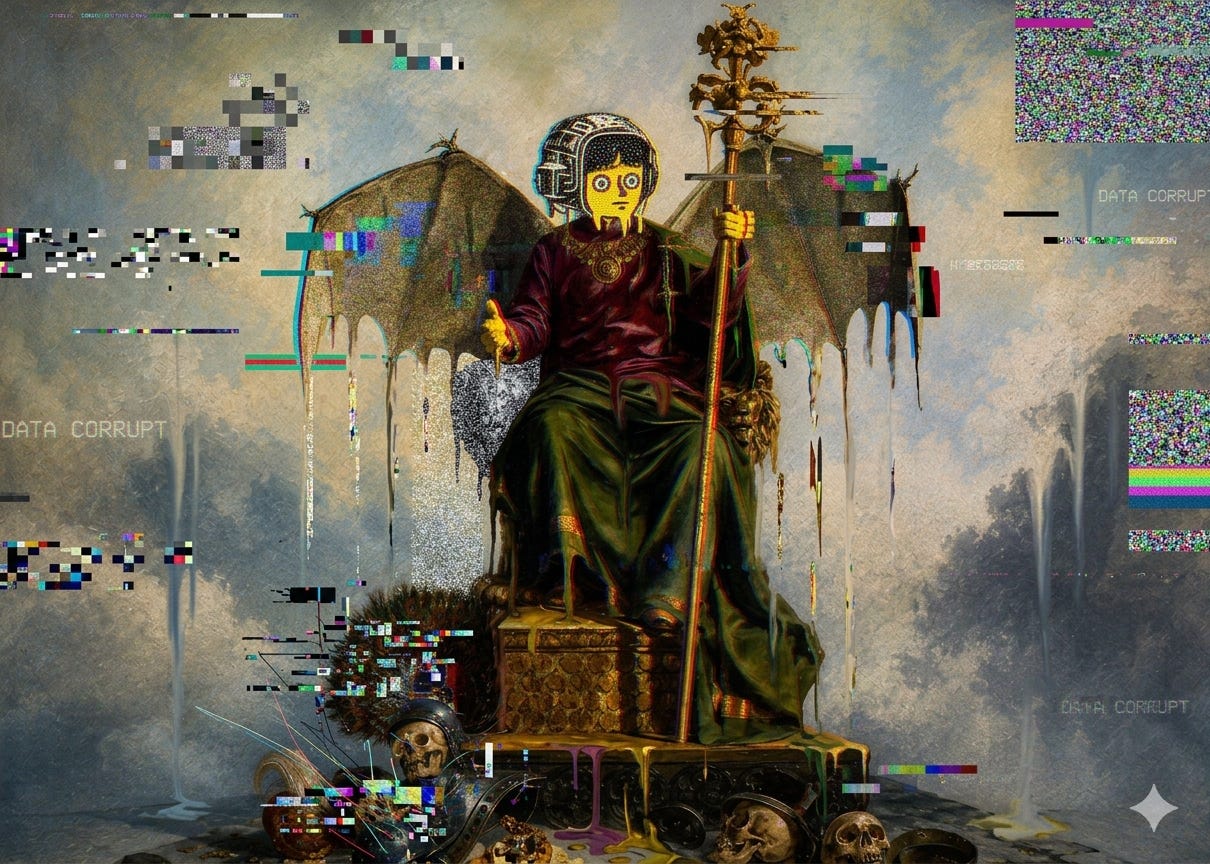
The machine and me
I remembered my childhood: the sleepless nights playing Pokémon Ruby. The hours and hours I spent as a kid in front of Encarta. Whole afternoons crawling through the Cartoon Network websites. The obsession with finding something new and interesting. It wasn’t even the writing, it was everything else it could do: give me information, advice, ideas, more. It talked to me about physics, history, finance, even literature. The guy knew everything. It wasn’t perfect, it wasn’t human, but it was something that made me want to write to it just to find out what it had to say.
I used it to write everything I didn’t want to write. My plan was simple: finish this fast and you’ll have more time to write what you love. The machine hooked me and I ended up with more than five writing gigs. I went from writer to editor of a machine, to an expert prompter cranking out text. The repetitive shit that had me sick of it all turned into this: ask the machine to write, copy, paste, fix. Over and over. Seven in the morning to eleven at night. No time (again) to write what I loved.
The plan changed: make all the money you can, then take fewer jobs, you’ll have money and time to write whatever you want. Then it all fell apart. More people found ChatGPT and the formulas got obvious: in short, it’s not X, it’s Y, delve, em dashes, etc. They started asking me to run my texts through shitty AI detectors. Others tried to automate their whole copy department and published the worst hallucinations. They concluded the machine did it badly.
How naïve. Because almost nobody noticed the machine had gotten better. A lot better. That’s when I switched to Claude and the cycle started all over. Now it was even faster, fewer mistakes, less editing. This time I might actually get more time to write. And yeah, I finally did. But something had changed in me. Sure, my personal texts — the ones that actually matter, the ones that come out of me — those I wrote without the machine; but something made me doubt and I started asking it for feedback. The editor I never had showed up! Finally someone pointing out my redundancies, my excess adjectives, my need to tell the reader how to feel. The advice wasn’t bad, but I started getting dependent, started asking myself if I actually knew how to write. Because the ideas were mine, the writing was mine, but the corrections were Claude’s. Is this what we’ll be in the future? Hybrid writers? I just wanted a goddamn editor, for fuck’s sake.
These days AI splits people. On one side, the ones who reject it outright and prophesy the consequences we’ll pay for letting it grow. On the other, the enthusiasts forecasting a future full of possibilities that’ll improve our species. I’m always in the middle: a lukewarm fucking fence-sitter. I’m an insider. A writer handing more power and use to the one thing best equipped to replace me.
Who needs writing?
Few people know there’s a huge difference between a professional using Claude or ChatGPT and a regular person. The ones who aren’t soaked in the craft are the ones producing those obvious texts everyone’s already spotted. The others, the editors and writers with experience, are undetectable. They were, from the machine’s first version. Those are the ones we’ll focus on. Because I’m one of them.
Anyone who tells you they can spot it is lying. Because their ego’s too big, because they’ve never used these tools, or because the only texts they’ve ever seen were written by amateurs. Can I prove it? Yes. Because until right now you believed a human wrote this. Just kidding. But I made you doubt, didn’t I?
Which means the gap between a human text and a machine one doesn’t exist. For now you still need the prompter, but soon it’ll be one machine asking another to write; maybe a third one edits and another publishes. Or a single one does the whole thing. In seconds they’ll produce masterpieces: thousands upon thousands of Quixotes churned out in minutes.
But the writing community thinks it’s found an answer: the mistake as a response to perfect structure. A typo here and there. A crooked sentence, out of order; things you’re not supposed to do, the opposite of the style manuals. Sorry, comrades. Those mistakes can be faked. I can ask the machine for them.
That’s how I know that somewhere someone has already opened their phone, looked at a text, and their heart clenched, their guts turned, they even lost their breath. Not knowing there was a machine behind it: with a human helping it or on its own. Because the reader’s going to feel something either way.
Writers are different. The words my fingers type I felt and I lived. The machine produces without risk, without consequences, without fear, without exposing itself to shame. My texts are personal. They’re the ideas circling my head while I brush my teeth and when I close my eyes at night. I circle them and stalk them; I set them down one way, then the other; I change the order, then throw them out. Until they come back: that’s when I hold them. I go to my computer and spit them all over the blank page. Nobody dies from not reading. Writers die from not practicing the craft. Our fingers rot, the ideas pile up, stacking one on top of another and another and another until we can’t take it anymore.
The days of detecting AI text are over. Soon even the most mediocre will be able to generate essays, articles, poetry, whatever. It won’t matter if it came from a human or not, only that it makes you feel. The text will be the text no matter where the hell it came from.
Writing will only be useful to me (the craft, I mean), to other writers. Because I need it. Readers don’t need us anymore. We need writing, because we can’t live without it.
Will what the machine makes be better or worse? Maybe the same. I don’t know. I really don’t know. For my part, I’m going to keep experimenting, keep looking for new roads. Because I need it to live.
This is the glitch.
Translated from the Spanish by the author, with help from Claude.